
Why Bus Rapid Transit Should Get a Boost from Lawmakers This Session
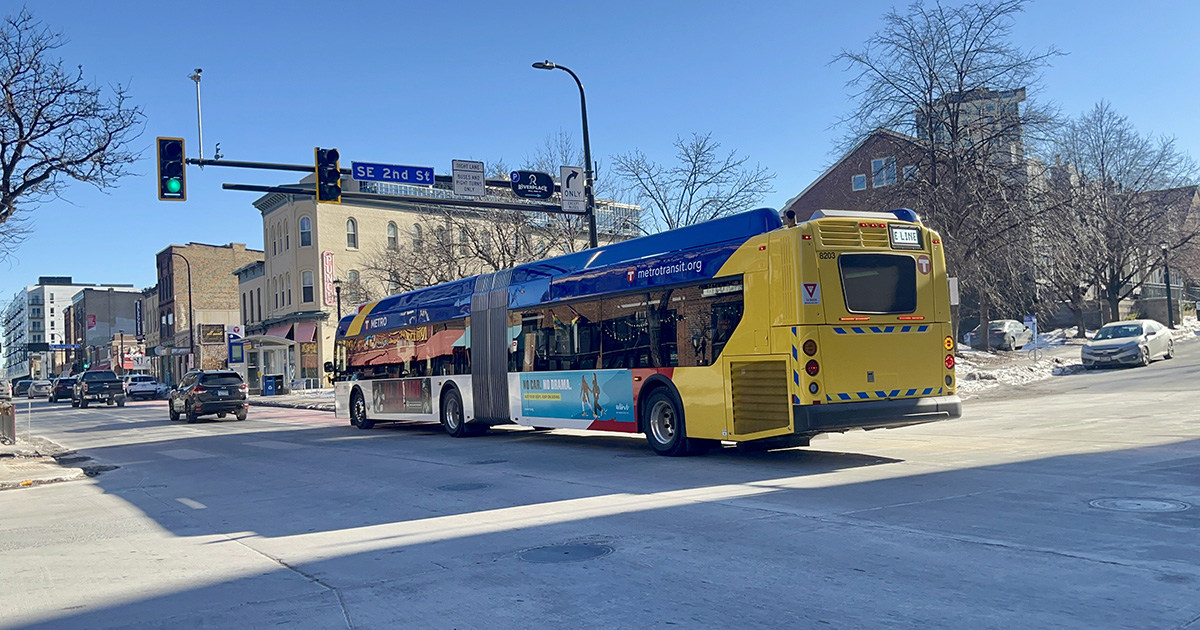
One day this winter, when Steph G. opened the Transit app to plan her trip to the office, she got a welcome surprise. The Saint Paul resident was accustomed to taking the Green Line from her apartment in Saint Anthony Park to downtown Minneapolis, but had to time her departure carefully, since the last leg of the trip required a significant walk down Hennepin Avenue.
Now, the app gave her a new option for her work commute: the METRO E Line. Just a few blocks from her house, the bus came quickly, got her downtown fast, and dropped her right outside her office.
“With gas prices going up and construction on Highway 280, it’s just so much easier and less stressful to leave my car at home,” she said. “I love how smooth the ride is on the E Line and the buses come so frequently I don’t even have to time my trip; I just leave when I’m ready. And, the route is great for so many destinations besides work—like restaurants in Northeast Minneapolis and Uptown, and the Walker Art Center.”
Like Steph, many residents of the Twin Cities are discovering new transportation options with the expansion of the bus rapid transit network. For decades, our public transit system has been starved of resources, forced into a constant state of scarcity. Thanks to years of advocacy by Move Minnesota supporters and partners, Metro Transit is now moving forward in building out high-quality bus service for people across the region—but we need lawmakers to continue to invest in fast, frequent transit to turn more plans into action.
We know what people want when they make decisions about transportation. According to a poll we conducted last year, convenience (58%), reliability (40%), and travel time (39%) are among the most important factors when Twin Cities residents decide how to get around. So it’s not surprising that bus rapid transit (BRT) routes are getting more people onboard with public transit.
Take the new METRO H Line, which is planned to begin construction in 2028, connecting downtown Minneapolis and the east side of Saint Paul. According to Metro Transit, service will be 20% faster than local buses, frequency will be every 10 minutes, and the combination of larger buses, offboard payment, and boarding from any door will make the experience more seamless for riders.
Those types of improvements, hallmarks of bus rapid transit routes, make a big difference in people’s daily lives. And as the region’s BRT network expands, so does BRT ridership. From 2022 to 2024, BRT ridership in our metro region increased 115% (7.2 million rides). In 2025 alone, BRT ridership grew 21%, with nearly 2 million more trips than 2024. This means more riders than ever have access to quick, convenient service in the Twin Cities. Over the past year, the new METRO B Line, new METRO E Line, and METRO Orange Line, have all been especially popular routes with significant increases in ridership worth celebrating.
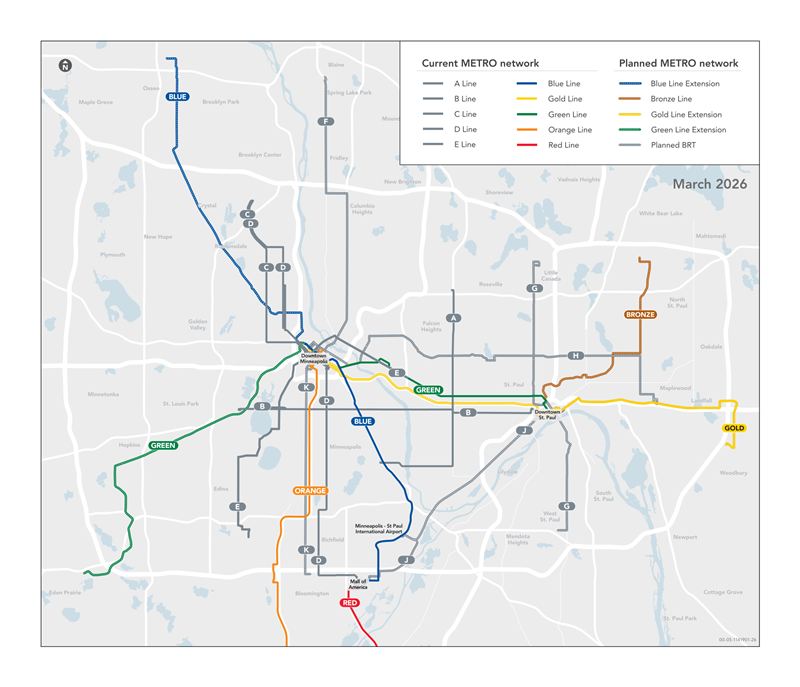
While no new lines are scheduled to open in 2026, there are many exciting plans to continue growing our region’s bus rapid transit network. And Metro Transit estimates that, by 2030, at least 580,000 people will be served by 12 BRT lines. Last month, the Metropolitan Council approved an Arterial Bus Rapid Transit Plan that includes the corridors for the future METRO J Line on West 7th and METRO K Line along Nicollet Avenue, respectively, and Metro Transit is currently seeking public comments to gather people’s opinions about potential H Line stations. Planning is also underway for the METRO F Line along Central and University, METRO G Line along Rice and Robert Street, an extension of the METRO Gold Line to Minneapolis, and a newly reimagined METRO Bronze Line in the East Metro. That progress doesn’t happen without continued advocacy and investment, though. And state lawmakers play a critical role in this transformation, too.
To maintain the momentum and get planned routes ready to ride, we need state legislators to champion bonding for bus rapid transit at the State Capitol. Perfect for new infrastructure projects, bonding will give the region’s planned bus rapid transit buildout a much-needed boost, bringing this popular service to more people and helping other regional resources stretch farther for transit operations and maintenance. This session, Minnesota lawmakers should provide $75 million in general obligation bonds to develop the METRO H Line—and continue to invest in quality public transit projects that create new, convenient, and affordable transportation options for riders like Steph and residents throughout the Twin Cities.
Learn more about our efforts to unleash new and existing resources to improve public transit—and take action to make your voice heard today!